


EMDR Intensives in Plymouth, MA
for Acute/Single Incident & Complex Trauma
EMDRIA Certified Therapist
Katherine DiFillippo Montague, LICSW
Life doesn’t look or feel the way you wish it did.
Maybe you were the “old soul.” The mature one. The independent one. The kid who could handle a lot without needing much.
And now you’re the adult who keeps going, holds it together, and tells everyone you’re fine - even when you feel exhausted, disconnected, overwhelmed, or stuck in patterns you understand but can’t seem to change.
I’m an EMDR Certified Therapist in Plymouth, MA. I offer in-person EMDR Intensives on the South Shore for adults healing from acute/single incident trauma, complex trauma, childhood emotional neglect, and the lasting impact of growing up too fast.
Together, we can work on the experiences that taught you to be strong, easy, responsible, or okay before you were actually ready to be.
EMDR can help you move beyond just understanding why you are the way you are - and start changing what still feels stuck.
So you can feel more grounded, trust yourself more, and stop feeling like you always have to be the one who can handle it.
-
Too much responsibility. Too much emotional labor. Too much pressure to keep it all together. You might be the person everyone relies on, the one who notices what needs to be done before anyone else does, the one who keeps showing up no matter how tired you are. And maybe underneath all of that, you feel anxious, resentful, disconnected, or just plain worn down.
-
Maybe you learned to be the strong one in a complicated family. You kept the peace and the secrets, read every room, and took care of everyone else long before anyone knew how to take care of you. It worked then, but now it shows up as anxiety, people pleasing, perfectionism, or a nervous system that never fully settles. You might understand the story and still feel the old alarm in your body, especially around family.
In therapy we make sense of how you survived and how those skills can soften. We build steadiness first with sleep, boundaries, and coping tools. We practice new ways to relate to yourself that are kinder and more honest. You get to keep what served you and let the rest go.
If it fits your goals, EMDR can help the past lose its charge so the present can breathe. You stay in control and we go at your pace. Over time, triggers quiet, self trust grows, and your life starts to feel like it belongs to you.
-
It makes sense to feel stuck when your head knows one thing and your body feels another. We can slow everything down, name what is actually happening, and make a simple plan that fits your real life. We will build steadiness first, then gently work on the patterns that keep pulling you back. You do not have to do this alone.
-
Sometimes you can point to exactly when things changed.
A car accident. A medical emergency. An assault. A sudden loss. A traumatic birth. A frightening event at work. Something you witnessed or experienced that your brain still seems to treat like it’s happening now.
You might avoid reminders of it, replay parts of it over and over, feel anxious or on edge, have trouble sleeping, or notice that your body reacts before you even have time to think.
EMDR can help your brain process what happened so the memory can feel more like something that happened in the past—not something you’re still bracing for in the present.
Single-incident trauma can also be especially well suited for focused EMDR Intensive work.
I work with high-functioning adults who are used to holding it all together.
Maybe you were the “old soul,” the mature one, the independent one, or the kid who learned early how to read the room and not need too much.
On the outside, you may look capable, responsible, and composed. Underneath, you may be carrying anxiety, overthinking, people-pleasing, perfectionism, or patterns that make it hard to ever fully relax.
Or maybe there was one specific experience - a loss, accident, assault, medical event, or other trauma - that changed how safe or like yourself you feel.
EMDR can help you work through both the experiences that shaped you over time and the moments that changed things suddenly, so you can feel less stuck in what happened and more able to trust yourself in the life you have now.
This might sound like you:
You look like you have it together, but you do not feel that way inside.
You were the “old soul,” the mature one, the easy one, or the kid who learned how to handle a lot.
You are always waiting for the other shoe to drop.
You feel like you did something wrong, even when you know you did not.
You get stuck in the “they’re mad at me” spiral.
You are really good at functioning and not nearly as good at feeling safe.
You can explain exactly why you are like this, but knowing has not made it stop.
You are deeply self-aware and still stuck in the same patterns.
Something happened, and even though it is over, part of you still reacts like it is not.
You are tired of holding everything together while still feeling anxious, on edge, or disconnected underneath.
You do not need more insight.
You need relief.
You want to stop living like you are still in trouble.
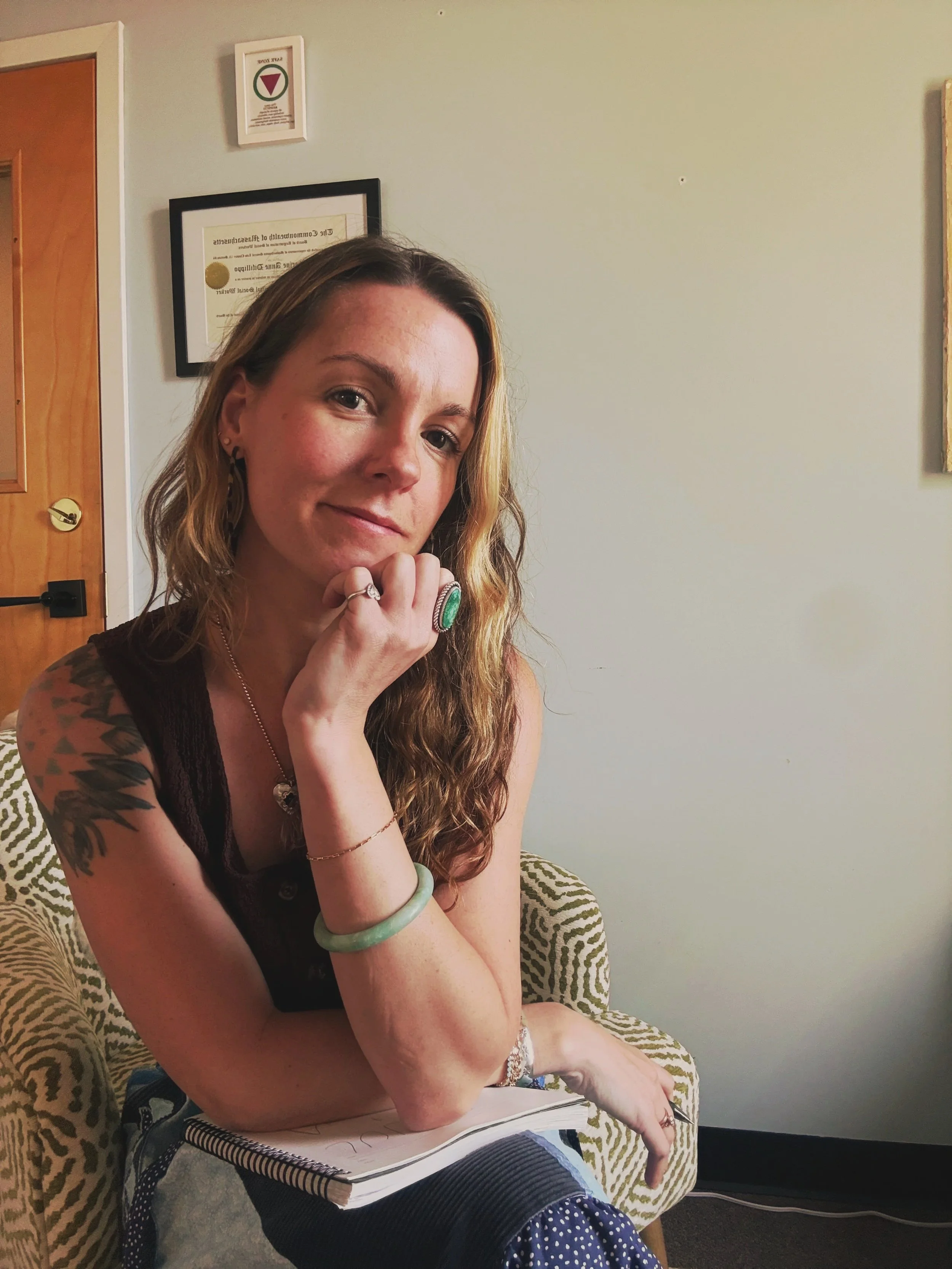


How I can help
I specialize in therapy for lasting change.
-
EMDR intensives offer a more focused way to do trauma work.
Instead of meeting once a week for a traditional therapy hour, intensives give us a longer block of time to settle in, identify what needs attention, and begin processing with fewer starts and stops.
EMDR intensives may be helpful for both acute trauma and complex trauma. For acute trauma, we may focus on a specific event or memory that still feels unresolved. For complex trauma, we may focus on a childhood wound, painful belief, relationship pattern, or cluster of experiences that continues to feel active in your life now.
An intensive is not about rushing your healing. It is about giving your nervous system more time, support, and structure to do the work without having to stop right when things are beginning to open up.
-
Complex trauma often develops over time, especially in relationships or environments where safety, care, consistency, autonomy, or emotional attunement were missing.
This may include childhood emotional neglect, emotional or physical abuse, childhood sexual abuse or incest, sexual exploitation, parentification, family instability, chronic criticism, attachment wounds, growing up around addiction, or feeling responsible for everyone else’s emotions. It can also develop in relationships or communities shaped by coercive control, manipulation, fear, or loss of autonomy, including abusive partnerships, high-control groups or cults, and harmful religious environments.
Complex trauma is not always about one single event. Sometimes it is years of learning to stay small, careful, capable, compliant, or constantly on alert in order to feel safe.
Therapy can help you understand how these experiences still show up in your relationships, self-worth, nervous system, boundaries, and ability to trust yourself.
-
PTSD can develop after experiencing or witnessing a traumatic event that involved actual or threatened death, serious injury, or sexual violence.
This may include sexual assault, physical assault, a serious accident, medical trauma, violence, sudden traumatic loss, or another frightening or life-threatening experience.
Afterward, your brain and body may continue to respond as though the danger is still happening. You might have intrusive memories, nightmares, flashbacks, or strong emotional or physical reactions to reminders of what happened. You may avoid certain places, people, conversations, or memories, feel disconnected or numb, have difficulty sleeping, or feel constantly on edge.
PTSD can make something that happened in the past feel very present.
EMDR can help your brain process the traumatic memory so it no longer carries the same intensity, and reminders of what happened become easier to experience without your nervous system reacting as though you are still in danger.